

Unlock the secrets of the iconic Mercedes-Benz W201 series! By the end of this article, you'll be able to identify specific models sold in North America, understand their unique characteristics, and master the often-forgotten maintenance tasks that even seasoned owners overlook. Get ready to give your W201 the TLC it deserves!
Mercedes W201 Model Overview (Canada & USA)
In the early 1980s, Mercedes-Benz took a bold step. Known for its large, luxurious sedans, the company introduced a smaller, more accessible model: the W201 series. Affectionately nicknamed the “Baby Benz,” the 190, as it was badged, was designed to bring the brand's legendary engineering and quality to a wider audience. Produced from late 1982 to 1993, it was a massive success and set the stage for the future C-Class.
The W201 was a marvel of engineering for its time. It featured a revolutionary multi-link rear suspension that provided excellent handling and comfort, a design that would be adopted by many other automakers. Despite its compact size, it was built with the same focus on safety and durability as its larger siblings, featuring anti-lock brakes and airbags later in its production run.
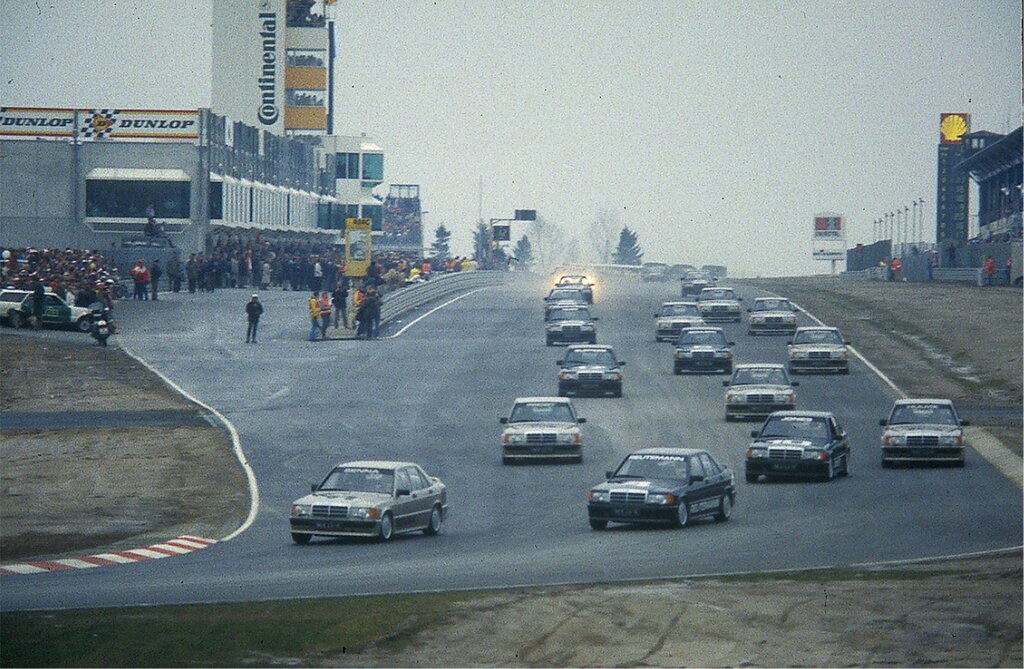
North American Lineup
When the W201 arrived in the United States and Canada for the 1984 model year, the lineup was straightforward. Buyers could choose between a gasoline model, the 190E 2.3, and a diesel model, the 190D 2.2. The 'E' in 190E stood for Einspritzung, German for fuel injection, while the 'D' denoted a diesel engine. Both were built to last, but offered very different driving experiences.
The 190E 2.3 was equipped with a 2.3-liter four-cylinder gasoline engine, offering a good balance of performance and economy. The 190D 2.2 used a 2.2-liter four-cylinder diesel engine, which was praised for its incredible fuel efficiency and longevity, though it was not particularly fast.
Evolution and Performance
As the years went on, Mercedes-Benz expanded the W201 lineup in North America. In 1987, the 190E 2.6 arrived, boasting a smooth and powerful 2.6-liter inline-six engine. This model offered a significant boost in performance and refinement, bringing the compact sedan closer to the experience of a larger Mercedes.
The most famous W201 models, however, were the high-performance variants developed with Cosworth. The 190E 2.3-16, available from 1986 to 1987 in the US, was a true sports sedan. It featured a potent 16-valve version of the 2.3-liter engine, an aerodynamic body kit, a sport-tuned suspension, and a dog-leg manual transmission. It was a direct competitor to the BMW M3 and established the W201's credentials on the racetrack.
The diesel line also saw an upgrade with the introduction of the five-cylinder 190D 2.5 in 1986, and later, the 190D 2.5 Turbo in 1987. The turbocharged model provided a much-needed increase in power, making it a far more capable highway cruiser without sacrificing the diesel's trademark efficiency.
| Model | Engine | Horsepower (U.S. Spec) | North American Years |
|---|---|---|---|
| 190E 2.3 | 2.3L 8v Inline-4 (M102) | 113 - 130 hp | 1984–1993 |
| 190D 2.2 | 2.2L 8v Inline-4 Diesel (OM601) | 72 hp | 1984–1985 |
| 190D 2.5 | 2.5L 10v Inline-5 Diesel (OM602) | 93 hp | 1986–1989 |
| 190D 2.5 Turbo | 2.5L 10v Inline-5 Turbodiesel (OM602) | 121 hp | 1987 |
| 190E 2.6 | 2.6L 12v Inline-6 (M103) | 158 hp | 1987–1993 |
| 190E 2.3-16 | 2.3L 16v Inline-4 (M102) | 167 hp | 1986–1987 |
Over its ten-year production run, the W201 received several updates, including subtle exterior revisions and interior upgrades. By the time the last car rolled off the line in 1993, the “Baby Benz” had proven that a compact car could deliver the uncompromising quality and prestige of a Mercedes-Benz. It remains a beloved modern classic for its robust engineering, timeless design, and engaging driving dynamics.
Identifying W201 Models
Exterior Clues
At a glance, all W201 models share the same sharp, compact silhouette. Mercedes-Benz designed this car for longevity, so the core bodywork didn't change much over its decade of production. However, key details on the exterior can tell you a lot about a car's age and model.
The most significant visual update happened in 1989. Before this, W201s had narrow, ribbed plastic cladding along the lower body and bumpers. These earlier cars have a more classic, utilitarian look.
From the 1989 model year onward, Mercedes introduced wider, smoother body panels, often called Sacco planks after designer Bruno Sacco. These panels were typically painted in a contrasting, darker metallic grey, giving the car a more substantial, modern appearance. The bumpers were also redesigned to integrate smoothly with this new cladding.
Another clue is the wheels. Base models often came with steel wheels and painted hubcaps. Higher-end models and those with sport packages were fitted with alloy wheels. The 15-hole "Gullideckel" (manhole cover) wheel is a classic design found on many later cars, while early 16-valve models had a flatter 15-inch wheel.
Reading the Badges
The most straightforward way to identify a W201 is the badge on the trunk lid. Mercedes used a simple system. Nearly all models start with 190. The letter that follows tells you the engine type: Dfor diesel and E for Einspritzung, the German word for fuel injection.
The number after the letter indicates the engine's displacement. A 190E 2.3 has a 2.3-liter gasoline engine, while a 190D 2.5 has a 2.5-liter diesel engine. The performance-oriented Cosworth models are also easy to spot, with badging like 190E 2.3-16, indicating a 16-valve cylinder head.
| Badge | Engine Type | Displacement | Notes |
|---|---|---|---|
| 190D 2.2 | Diesel | 2.2L | The initial diesel model in North America. |
| 190D 2.5 | Diesel | 2.5L | Replaced the 2.2L, offering more power. |
| 190D 2.5 Turbo | Diesel | 2.5L | A turbocharged version with significantly more performance. |
| 190E 2.3 | Gasoline | 2.3L | The most common model, with an 8-valve 4-cylinder engine. |
| 190E 2.6 | Gasoline | 2.6L | A smooth inline-6, typically found on higher-trim cars. |
| 190E 2.3-16 | Gasoline | 2.3L | High-performance Cosworth model with a 16-valve head. |
Keep in mind that badges can be removed or swapped by owners, so always use them in combination with other clues like the interior and exterior trim.
Inside the Cabin
The interior of the W201 is a masterclass in durable, no-nonsense design. But like the exterior, certain features can help you pinpoint the model and year.
Most North American models came with MB-Tex vinyl, a famously tough material that often looks new even after decades. Cloth was also available, and leather was an option on high-end models like the 2.6 and 16-valve. The 16-valve models are famous for their heavily bolstered sport seats, often with plaid cloth inserts.
The driver-focused cockpit of a W201 features clear, simple gauges and high-quality materials.
Wood trim also varied. Early 190E 2.3 models usually had simple black plastic trim around the shifter. Zebrano wood trim became standard on the 190E 2.6 and optional on other models, eventually becoming more common across the range in later years. Burl walnut was a premium option, often seen on later, well-equipped cars.
Later models (from 1989 on) received subtle but welcome upgrades. These cars often have more power features, like power seats for both driver and passenger, whereas earlier cars might only have a powered driver's seat. The instrument cluster also saw minor font and lighting changes over the years, though the overall layout remained consistent.
By combining these exterior, badging, and interior clues, you can accurately identify almost any W201 you come across.
Common Maintenance Issues
Engine and Gaskets
The engines in the W201 series, particularly the M102 four-cylinder and M103 six-cylinder, are known for their durability. However, they aren't immune to age-related issues. The most significant of these is the head gasket.
The head gasket is a critical seal between the engine block and the cylinder head. It contains combustion pressure and keeps engine oil and coolant from mixing. Over time, this gasket can degrade and fail. Signs of a failing head gasket include milky, emulsified oil on the dipstick or oil cap, white smoke from the exhaust, and overheating. Addressing this promptly is crucial to prevent catastrophic engine damage.
Other seals also require attention. The valve cover gasket is a common source of oil leaks, often dripping onto the hot exhaust manifold, which creates a burning smell. Similarly, the timing cover seals and oil pan gasket can dry out and leak over time. Regular inspection for oil and coolant drips under the car can help you catch these issues early.
Fuel and Air Systems
Most W201s use the Bosch KE-Jetronic fuel injection system, a reliable but complex mechanical setup. Its performance depends on clean fuel and the integrity of its many vacuum hoses. The most common cause of poor running, erratic idling, and stalling is a vacuum leak.
The rubber hoses and intake boot become brittle and crack with age, allowing unmetered air to enter the engine and disrupt the air-fuel mixture. A thorough inspection of all vacuum lines is a primary diagnostic step for any performance issue. Replacing old, cracking hoses can dramatically improve how the car runs.
Beyond vacuum leaks, the fuel system itself needs regular care. Key maintenance items include:
- Fuel Filter: Clogged filters restrict fuel flow, straining the fuel pumps and causing hesitation. Regular replacement is essential.
- Fuel Pumps: The W201 has two electric fuel pumps. If one fails, it can cause starting or running problems under load.
- Idle Air Control Valve (IACV): This valve manages the engine's idle speed. It can become clogged with carbon, leading to a rough or unstable idle. Cleaning it is often all that's needed.
Suspension Components
The W201 was praised for its sophisticated multi-link rear suspension, which provided excellent handling. However, this complexity means there are several wear items that need checking. Worn suspension components can lead to poor alignment, uneven tire wear, and a loose or clunking feeling when driving.
Commonly worn parts include:
- Ball Joints: These connect the control arms to the steering knuckle and can cause clunking sounds over bumps when worn.
- Tie Rod Ends: Worn tie rods create play in the steering, making the car feel vague or wander on the road.
- Control Arm Bushings: These rubber bushings isolate vibrations. When they crack and fail, they can cause noise and alignment issues.
- Flex Discs: These rubber couplings connect the transmission to the driveshaft. Cracks or deterioration can cause a thud when shifting into gear.
Electrical Systems
The electrical system in the W201 is relatively straightforward compared to modern cars, but it has its quirks. One of the most common failure points is the Over-Voltage Protection (OVP) relay. This small, red-topped relay with a fuse on top protects sensitive electronics like the ECU and ABS module from voltage spikes.
When the OVP relay fails, it can cause a range of strange issues, including a no-start condition, ABS warning lights, and erratic idle. It's often one of the first things to check when diagnosing electrical problems.
Another area to inspect is the engine wiring harness. The insulation on the wires can become brittle and flake off over time, especially in the high-heat environment of the engine bay. This can lead to short circuits and unpredictable electrical behavior. Finally, ensure all ground straps are clean and secure, as poor grounds are a frequent source of hard-to-diagnose electrical gremlins.
By staying on top of these common maintenance areas, you can ensure a W201 remains a reliable and enjoyable classic for years to come.
Preventive Maintenance Practices for your Mercedes 190E (W201)
Your Mercedes W201 is a marvel of engineering, built to last. But longevity isn't just about good design; it's about consistent care. Shifting from a reactive mindset (fixing what's broken) to a proactive one (preventing breaks in the first place) is the secret to enjoying this classic for years to come. A structured maintenance schedule is your best tool. It keeps your car reliable, safe, and saves you from unexpected, costly repairs down the road.
Under the Hood
The engine bay is the heart of your car and where your preventive maintenance routine should begin. Regular checks here can catch small issues before they become major problems. The most fundamental habit is checking your fluids. Each one has a critical job, and low or contaminated fluid is a clear warning sign.
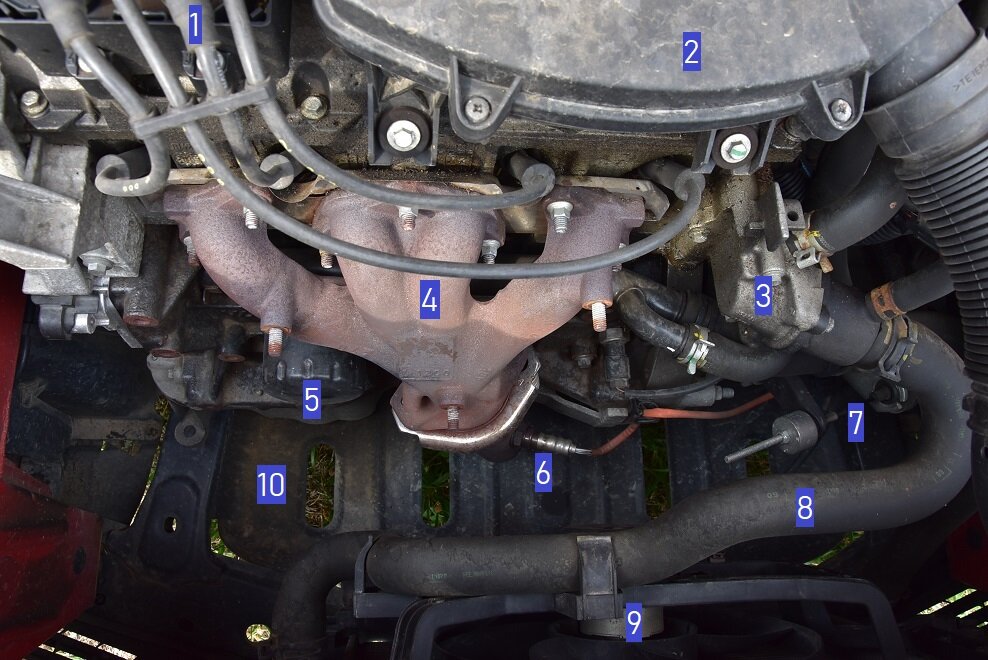
Get into the habit of checking these fluids regularly. A quick look once a month and before any long trip is a good rule of thumb. Pay attention not just to the level, but also the color and consistency. Milky oil, for example, can indicate a coolant leak—a classic sign of a potential head gasket issue.
| Fluid | When to Check | What to Look For |
|---|---|---|
| Engine Oil | Monthly | Level on dipstick, dark brown/black color. Milky or gritty oil needs immediate attention. |
| Coolant | Monthly | Level in reservoir. Ensure correct color (usually blue or green for these models). |
| Brake Fluid | Every 3 months | Level in reservoir. Fluid should be clear or light amber. |
| Power Steering Fluid | Every 3 months | Level in reservoir. Check for leaks around the pump and hoses. |
| Windshield Washer | As needed | Keep it topped off for clear visibility. |
Beyond fluids, regular servicing of key engine components is crucial. This includes replacing filters and spark plugs. Clogged air and fuel filters can strangle engine performance and put stress on the fuel injection system. Fresh spark plugs ensure efficient combustion, giving you better performance and fuel economy.
Smooth Operator
The W201 is known for its solid, comfortable ride. Keeping it that way involves paying attention to the suspension and steering systems. These components wear down gradually, so changes can be easy to miss in day-to-day driving. A proactive approach is key.
Every time you get an oil change, have a mechanic inspect the suspension. They should look at the ball joints, control arm bushings, and tie rods. These parts are made of rubber and metal that wear out. Catching a cracked bushing early is a simple fix; letting it fail can lead to bigger problems and an unsafe vehicle.
Listen to your car. Do you hear clunking sounds over bumps? Does the steering feel loose or vague? These are cries for help from your suspension. Don't ignore them.
A quick visual inspection of your tires can also reveal suspension issues. Uneven wear patterns often point to alignment problems or worn components.
Staying Connected
The electrical system in the W201 is robust but not immune to age. Wires and connectors can become brittle, and corrosion can build up on contacts, leading to frustrating and hard-to-diagnose issues.
A simple annual check can prevent most problems. Start with the battery. Make sure the terminals are clean and tight. Corrosion can be cleaned off with a wire brush and a solution of baking soda and water. Check that the battery is held down securely; vibrations can shorten its life.
Next, perform a visual inspection of the engine bay wiring. Look for any cracked, frayed, or exposed wires. Pay special attention to the wiring harnesses near the engine, as heat can degrade the insulation over time. Check your fuses, too. If you see any that look burnt or corroded, replace them. A bad fuse is often a symptom of another problem, so it's worth investigating why it blew.
Regularly inspecting electrical connections can prevent future failures.
Finally, test all your lights: headlights (high and low beams), tail lights, brake lights, and turn signals. A non-working bulb is usually a simple fix, but it's a critical safety issue.
Keeping a Schedule
Sticking to a schedule turns maintenance from a chore into a routine. The W201's original service intervals are a great starting point, but consider the car's age. It's often wise to be more proactive. A good general guideline is to service your car based on whichever comes first: mileage or time.
Here’s a simplified schedule to get you started. Always consult your owner's manual or a trusted mechanic for specifics tailored to your car and driving habits.
| Interval (Mileage or Time) | Key Service Items |
|---|---|
| 5,00 miles / 8,000 km’s or 6 months | Engine oil and filter change. Inspect belts, hoses, and fluid levels. Rotate tires. |
| 15,000 miles / 24,000 km’s or 1 year | All of the above, plus: replace engine air filter and cabin air filter (if equipped). Inspect brake system. |
| 30,000 miles / 50,000 km’s or 2 years | All of the above, plus: replace spark plugs and fuel filter. Flush and replace coolant and brake fluid. |
| 60,000 miles / 100, 000 km’s or 4 years | All of the above, plus: replace transmission fluid and filter. Inspect suspension components. |
By following these preventive practices, you're not just maintaining a car; you're preserving a piece of automotive history.