

Unlock the secrets to keeping your classic Mercedes R107 SL running like a dream, with a special focus on the nuances between US and Canadian models. You'll gain a deep understanding of forgotten maintenance procedures and how regional differences can impact your vehicle's longevity.
Introduction to the R107 SL: The Enduring Icon
When a car stays in production for 18 years, it’s not just a successful product. It’s a cultural landmark. The Mercedes-Benz R107 SL is one of those rare vehicles. Produced from 1971 all the way to 1989, it became a symbol of timeless style, robust engineering, and understated luxury.
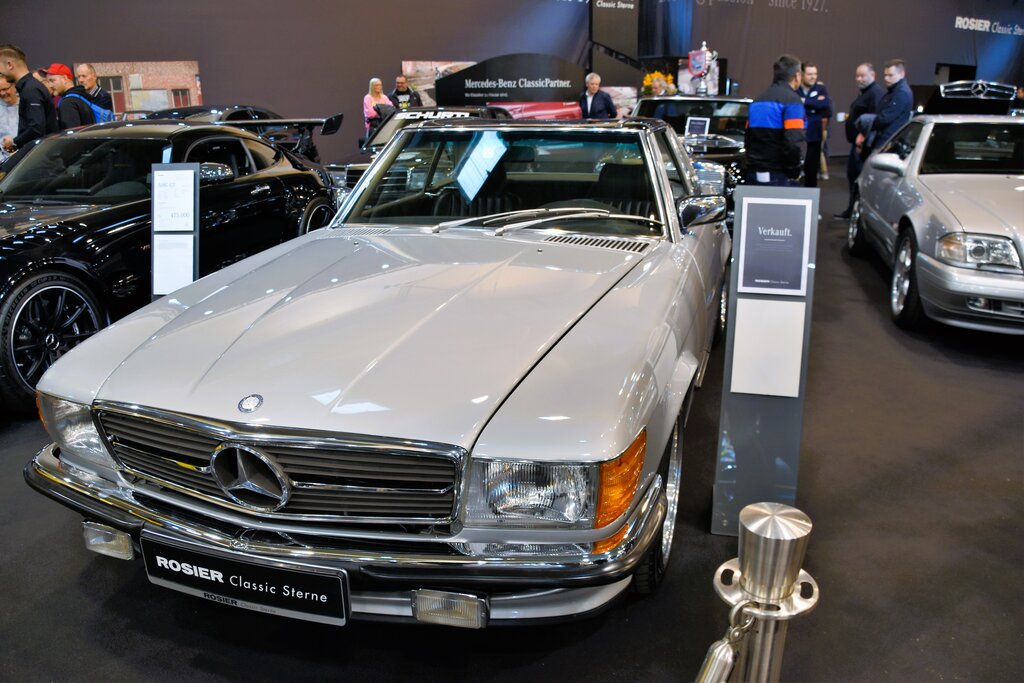
The R107 was a replacement for the much-loved W113 "Pagoda" SL. While the Pagoda was delicate and elegant, Mercedes designed the R107 for a new era. Safety regulations, particularly in the United States, were becoming much stricter. The new SL needed to be stronger and safer without sacrificing its open-top, grand touring character.
The result was a car that looked substantial and solid. It had clean, crisp lines, a longer wheelbase than its predecessor, and a design that managed to look modern for nearly two decades.
One of its defining features was the dual-top design. Owners enjoyed a stowable fabric soft top for spontaneous sunny days and a color-matched, removable hardtop for winter months. This versatility made the R107 a practical choice for a luxury convertible, equally at home cruising along a coast or navigating city streets in colder weather.
An Evolving Legacy
Over its 18-year run, the R107 saw gradual but significant updates. Mercedes-Benz didn't believe in yearly cosmetic changes. Instead, they focused on engineering improvements, primarily under the hood. The car launched with a 3.5-liter V8 in the 350 SL, but the engine lineup expanded and evolved to meet changing emissions standards and performance expectations.
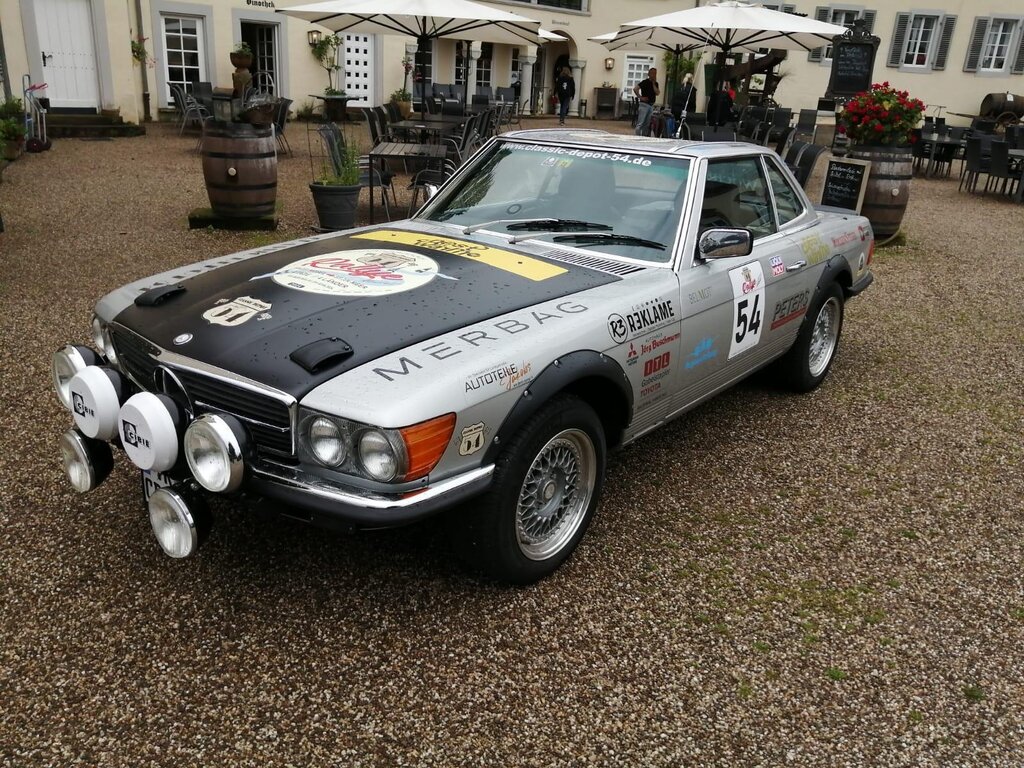
The North American market was crucial for the SL, and models sold there often had different specifications. For instance, early U.S. models were badged as the 450 SL but used a detuned engine to comply with regulations. They also featured larger, federally mandated bumpers starting in 1974, a controversial design choice that clearly distinguishes them from their European counterparts.
Major updates occurred throughout the car's life, introducing more powerful and efficient engines, improved transmissions, and subtle interior refinements. This constant evolution kept the R107 relevant in a rapidly changing automotive landscape.
| Years | Key Models & Updates |
|---|---|
| 1971–1980 | Initial launch with 350 SL and 450 SL (V8 engines). Addition of the 6-cylinder 280 SL. |
| 1980–1985 | Introduction of new alloy V8s in the 380 SL and 500 SL, offering better fuel economy. |
| 1985–1989 | Final update with the powerful 560 SL for select markets (including the U.S.) and a revised 300 SL (6-cylinder). |
A Pop Culture Mainstay
The R107 wasn't just a car; it was a statement piece. Its presence in movies and TV shows cemented its status as an aspirational vehicle. From Dallas to Beverly Hills Cop, the SL was the ride of choice for the successful and stylish. This visibility made it one of the most recognizable cars of the 1980s.
The car's appeal came from its unique blend of qualities: it was sporty but not a punishing sports car, luxurious but not ostentatious, and incredibly well-built.
Today, the R107 is a beloved classic. Its long production run means parts are relatively available, and its straightforward, durable engineering makes it a popular choice for enthusiasts looking for a usable vintage car. The design has aged gracefully, looking just as elegant today as it did decades ago. For many, it represents a golden era of Mercedes-Benz engineering, a time when cars were built to last, not to be replaced.
Technical Specifications:
Engines and Performance
The heart of the R107 was its range of robust engines. Over its 18-year production run, Mercedes-Benz offered a variety of V8 and inline-six powerplants, each with distinct characteristics tailored to different markets and regulations. The V8 engines were known for their smooth power delivery and ample torque, making the SL an effortless grand tourer.
Initially, the R107 launched with V8 engines. The earliest models, like the 350 SL, used a 3.5-liter V8. For the North American market, this was quickly followed by the 450 SL with a larger 4.5-liter V8 to compensate for power losses from stricter emissions controls. Later updates introduced more efficient V8s, such as the all-aluminum 3.8-liter and 5.0-liter engines in the 380 SL and 500 SL.
Toward the end of its life, the most powerful version, the 560 SL, was created exclusively for the American, Japanese, and Australian markets. In Europe, inline-six cylinder engines were also offered, providing a balance of performance and fuel economy. The 280 SL featured a twin-cam six-cylinder, while the later 300 SL used a modern single-cam engine.
| Model | Engine Type | Displacement | Power (approx. hp) | Torque (approx. lb-ft) |
|---|---|---|---|---|
| 350 SL (Euro) | M116 V8 | 3.5 L | 200 | 211 |
| 450 SL (US) | M117 V8 | 4.5 L | 180 | 220 |
| 280 SL (Euro) | M110 Inline-6 | 2.8 L | 182 | 176 |
| 380 SL | M116 V8 | 3.8 L | 155 (US) / 215 (Euro) | 196 (US) / 224 (Euro) |
| 500 SL (Euro) | M117 V8 | 5.0 L | 241 | 296 |
| 300 SL (Euro) | M103 Inline-6 | 3.0 L | 185 | 188 |
| 560 SL (US) | M117 V8 | 5.6 L | 227 | 279 |
Transmission Systems
The vast majority of R107s were equipped with an automatic transmission, reinforcing the car's identity as a comfortable cruiser rather than an aggressive sports car. Early models typically came with a 3-speed automatic. Starting in 1980, this was upgraded to a more modern and efficient 4-speed automatic, which improved both acceleration and highway fuel economy.
A manual transmission was available, primarily in Europe, but it's a rare find. Both 4-speed and later 5-speed manual gearboxes were offered, usually paired with the smaller V8 and inline-six engines. These manual models provide a more engaging driving experience for some, but the smooth 4 speed automatic transmission is considered by many to be the ideal choice for effortless cruising.
Regardless of the transmission, power was always sent to the rear wheels, following the classic front-engine, rear-wheel-drive layout.
Chassis and Suspension
The R107's chassis was a monocoque design, meaning the body and frame are a single, rigid structure. This was a significant factor in the car's solid feel and safety, a key Mercedes-Benz engineering priority. The structure was exceptionally strong to compensate for the lack of a fixed roof, minimizing the body flex common in convertibles of the era.
The suspension was designed for a comfortable yet controlled ride. The front featured a double-wishbone setup, which allows for precise wheel control and excellent handling stability. At the rear, Mercedes-Benz used its proven semi-trailing arm design. This independent rear suspension system provided a smooth ride over bumps while keeping the tires firmly planted on the road during cornering.
This suspension combination gave the R107 its signature ride quality: comfortable enough for long journeys on the highway but stable and predictable on winding roads. It was a setup that prioritized safety and comfort over raw, track-focused performance.
The R107's engineering was a testament to the brand's focus on durability, comfort, and refined performance. The various engine, transmission, and chassis configurations ensured there was a model to suit different tastes and market demands throughout its long production life.
Maintenance Essentials:
Essential Maintenance
Owning a classic like the R107 SL is a rewarding experience, but it requires consistent care. Sticking to a routine maintenance schedule is the single best thing you can do to ensure your vehicle runs smoothly, preserves its value, and remains reliable for years to come. These regular checks are straightforward and address the most critical systems in your car.
Engine Oil and Filters
The lifeblood of your engine is its oil. It lubricates moving parts, cleans away contaminants, and helps regulate temperature. Over time, oil breaks down and collects dirt, losing its effectiveness. That's why regular oil changes are non-negotiable.
For an R107, it's wise to change the engine oil and filter every 3,000 to 5,000 miles (depending if Conventional, Semi Synthetic or Full Synthetic), or at least once a year, regardless of mileage. Older engines benefit from more frequent changes. Always use a high-quality oil that meets the specifications for your specific model year and engine type. Continental has curated options in stock for your application.
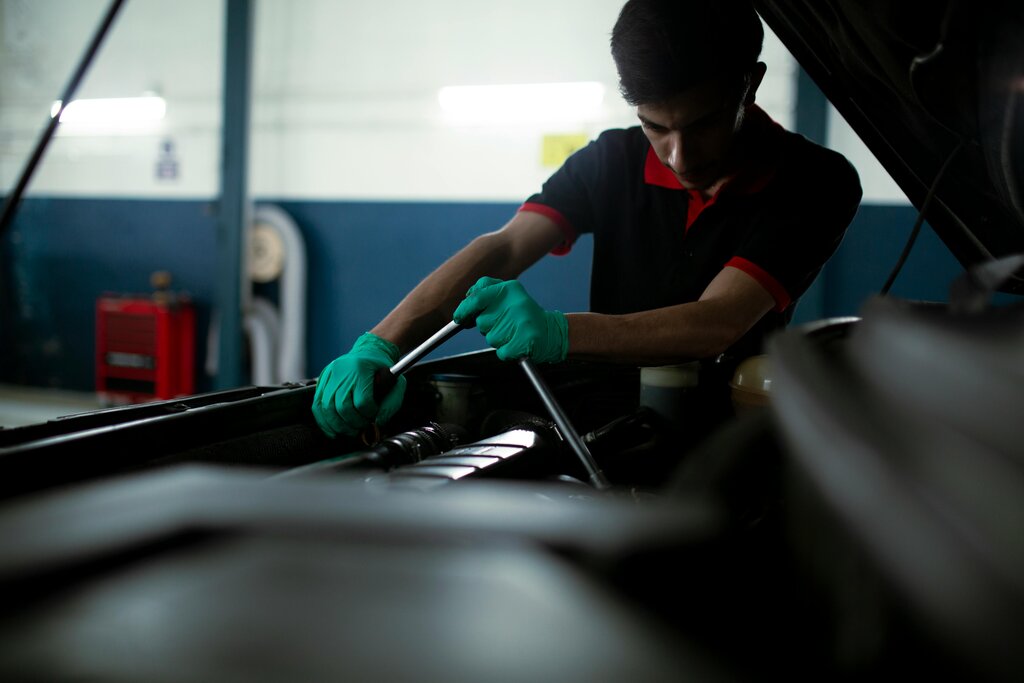
Don't forget the filter. The oil filter traps harmful debris and sludge, preventing it from circulating through the engine. Changing the filter with every oil change is a simple step that ensures the new oil stays clean for as long as possible. The air filter is also crucial, as it stops dust and debris from entering the engine. Inspect it at every oil change and replace it when it looks dirty.
Clean oil and fresh filters are the cheapest insurance you can buy for your engine's long-term health.
Brake System Checks
Your ability to stop safely is paramount. The R107's brake system is robust, but its components wear down with use and age. Regular inspection is key to catching issues before they become dangerous.
The system consists of several key parts: brake pads, rotors (or discs), calipers, brake lines, and brake fluid. Each needs attention.
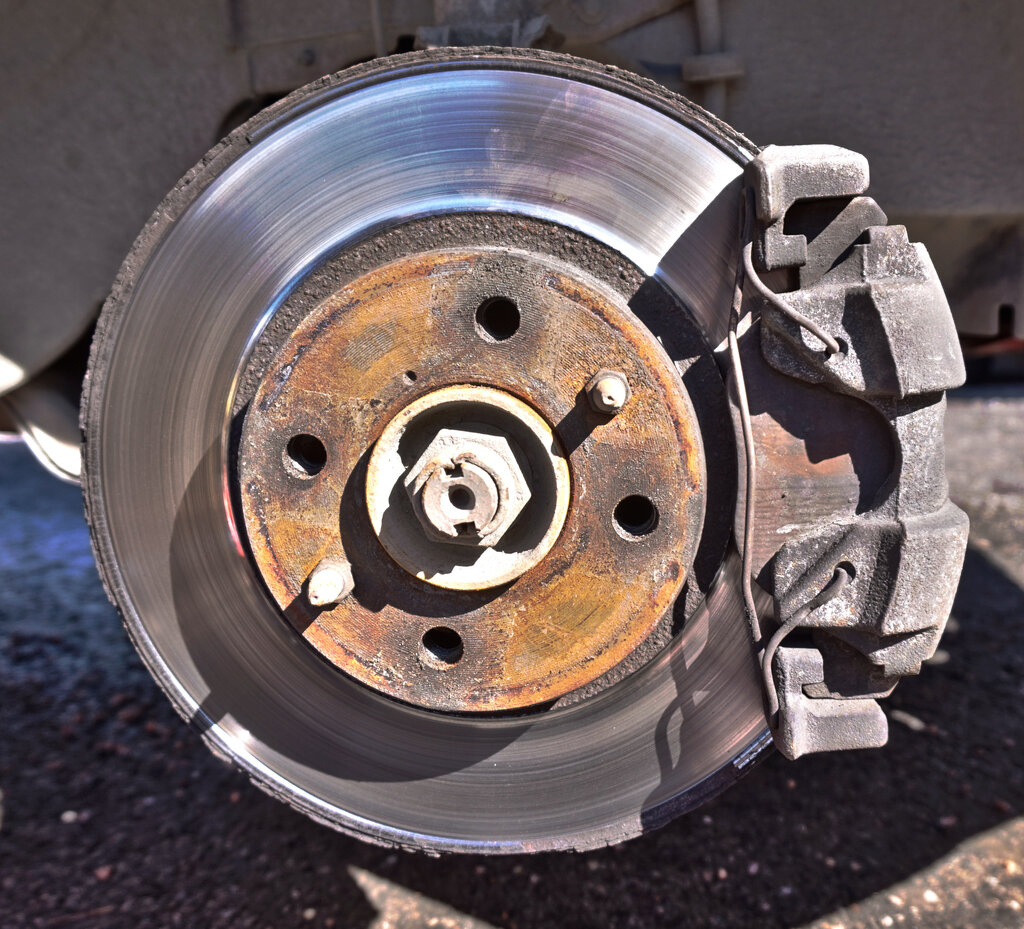
Start with a visual inspection. Check the thickness of your brake pads. Most have a built-in wear indicator, a small metal tab that squeals when the pad material gets too low. You can often see the pads and rotors through the spokes of your wheels. The rotors should be smooth and free of deep grooves or significant rust.
Next, check the brake fluid. Locate the brake fluid reservoir in the engine bay. The fluid should be clear with a light amber tint. If it's dark or murky, it's time for a flush. Brake fluid is hygroscopic, meaning it absorbs moisture from the air, which can lead to corrosion and reduce stopping power. It should be completely replaced every two years.
Finally, inspect the flexible brake lines that run to each wheel. Look for any cracks, bulges, or signs of leaking. These rubber hoses can degrade over time and are a critical failure point if neglected.
Tire Care and Safety
Tires are your car's only connection to the road, so their condition directly affects handling, comfort, and safety. Proper maintenance is simple and takes just a few minutes.
Check your tire pressure at least once a month when the tires are cold. The correct pressure for your R107 is listed on a sticker inside the driver's door jamb or in the owner's manual. Under-inflated tires wear out faster, reduce fuel economy, and handle poorly.
Keeping up with these basics will ensure your classic Mercedes-Benz remains a pleasure to drive.